


Taiwan Holds Geopolitical Significance for Global Technologies
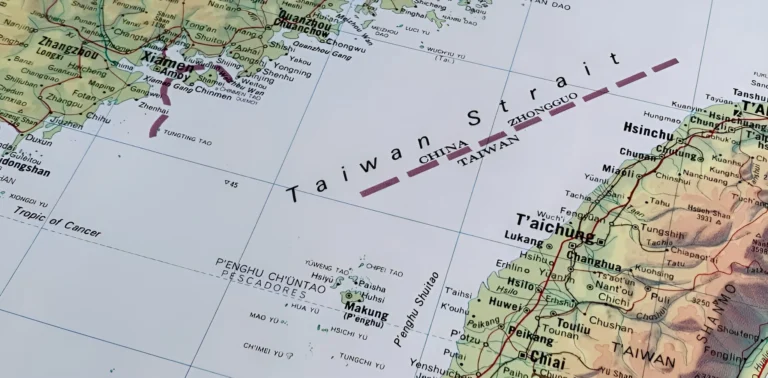
Map of the Taiwan Strait. Photo: The Conversation
May 14, 2026 Hour: 2:27 pm
🔗 Comparte este artículo
Strategic maritime routes and semiconductor dominance define the island’s role in the 21st century.
The island of Taiwan has become a key player in global geopolitics, where historical sovereignty and modern economic interests converge. Located about 100 miles off the southeast coast of China, Taiwan is a focal point of territorial contention and a structural pillar of the current international order.
RELATED:
Trump Between Cuba and Taiwan
Understanding Taiwan requires looking past the immediate political rhetoric and examining the underlying geographical and technological factors that make the island indispensable to both the East and the West.
The “Taiwan question” dates back to the mid-20th century, but its relevance has increased as the world moves towards a multipolar framework. While most major international bodies and nations officially recognize the One-China Principle, the island’s strategic positioning has attracted significant military and economic interest from external powers.
This article explores how Taiwan’s unique location and its role in the global supply chain have transformed it into a critical factor for global stability and the future of international trade.
Maritime Routes and the Strategy of Encirclement
Taiwan’s strategic geography gives it a dominant position along some of the world’s most important maritime trade routes. The island is a central link in what geographers and military strategists refer to as the “First Island Chain”, a series of archipelagos stretching from Japan to the Philippines.
Taiwan’s strategic location serves as a crucial transportation hub, facilitating seamless connectivity between the East China Sea and the South China Sea. For China, the island represents a significant challenge to its goal of achieving direct and unobstructed access to the deep waters of the Pacific Ocean.
Control or influence over the Taiwan Strait is not just a matter of territorial pride; it is a matter of economic survival. The strait is one of the busiest shipping lanes in the world, with the majority of container ships travelling from South Asia and the Middle East to hubs in Northeast Asia passing through it.
Should this corridor be closed or contested, the resulting detour around the eastern side of Taiwan would add significant time and fuel costs to global shipping, impacting the prices of consumer goods across the Americas and Europe.
Furthermore, the maritime access provided by Taiwan is inextricably linked to the energy security of the region. A significant portion of the oil and liquefied natural gas (LNG) destined for major industrial powers in Asia passes through these waters.
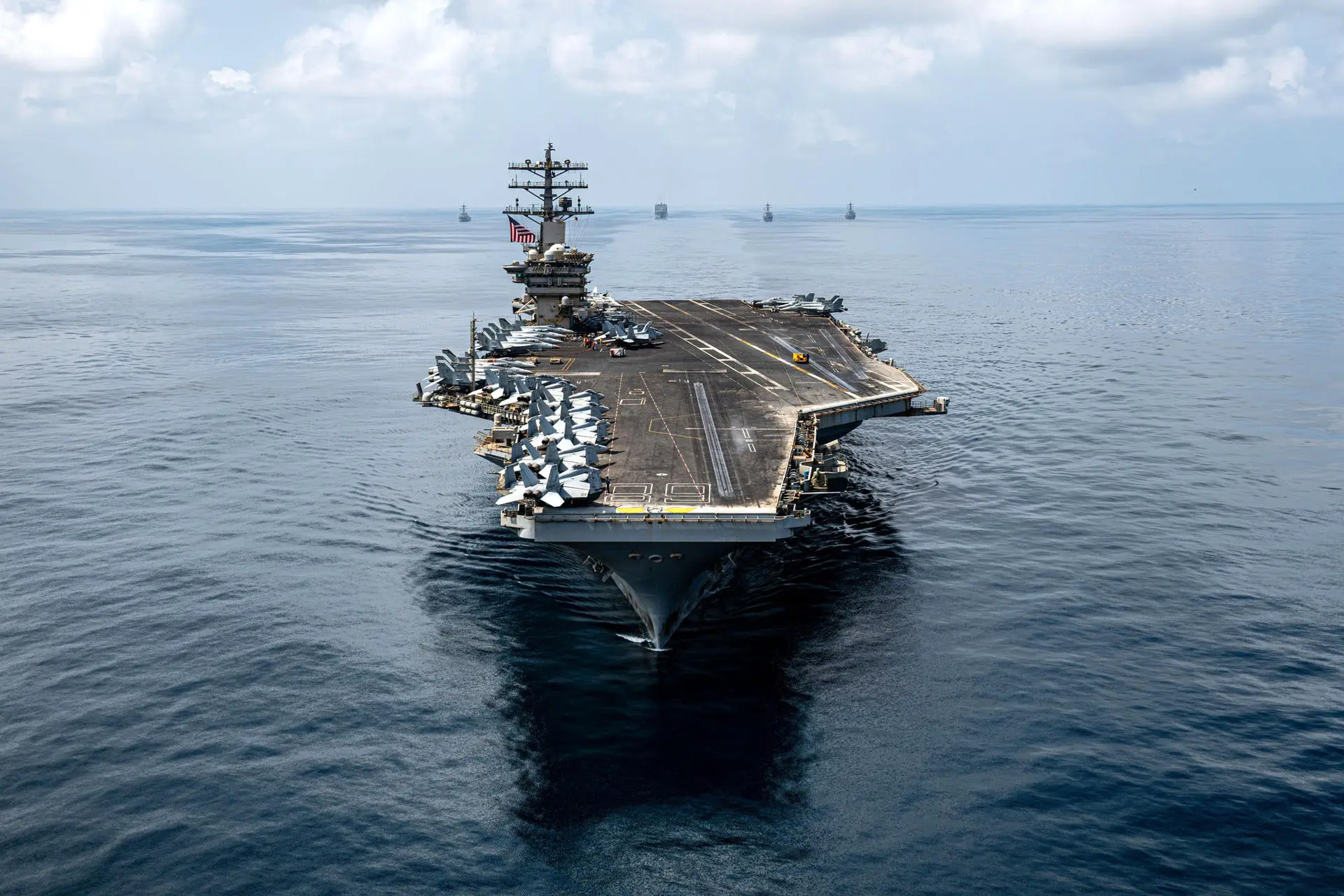
Consequently, the presence of foreign military assets in the region is often viewed through two different lenses: Western media frequently presents it as a “freedom of navigation” necessity, while alternative perspectives from the Global South and regional outlets often highlight it as an intentional strategy of maritime encirclement designed to contain China’s economic rise.
Semiconductors and Global Economic Dependency
The geoeconomic importance of Taiwan is anchored in its near-monopoly over the production of advanced semiconductors, often referred to as the “oil of the 21st century.” The Taiwan Semiconductor Manufacturing Company (TSMC) is the world’s most critical corporation, accounting for over 90% of the manufacturing capacity for the most sophisticated chips.
These microscopic components are essential for nearly every aspect of modern life, powering everything from smartphones and medical devices to artificial intelligence and advanced military hardware.
This extreme concentration of production has resulted in what analysts term the “Silicon Shield,” a theory positing that Taiwan’s economic indispensability offers protection from conflict, as a disruption in this sector would trigger a global economic depression.
The technical complexity of producing chips below the 7-nanometer threshold means that even the most advanced economies in the West cannot quickly replicate Taiwan’s infrastructure. While the United States has passed legislation like the CHIPS Act to encourage domestic manufacturing, the advanced skills of the workforce and integrated supply chains found in Taiwan remain decades ahead of global competitors.
For the Global South, any instability in this sector would be catastrophic; a halt in Taiwanese production would likely lead to a double-digit contraction in global GDP, causing supply chain collapses that would disproportionately affect developing nations reliant on affordable technology and digital infrastructure.
Diplomacy and the “Red Line”: The Legacy of Trump and Xi
The ongoing diplomatic tensions surrounding Taiwan reached a significant turning point during the presidency of Donald Trump, particularly during his high-level summits with President Xi Jinping. During these meetings, the two leaders addressed the fundamental disagreement regarding the island’s status.
For the Chinese leadership, the issue of Taiwan is of the utmost importance. It is regarded as the “first red line” that cannot be crossed, a matter of national sovereignty and territorial integrity that is non-negotiable. Xi Jinping has consistently maintained that the eventual reunification of Taiwan with the mainland is a historical necessity, emphasizing a preference for peaceful means but refusing to rule out other options if independence is formally declared.
Under the Trump administration, U.S. policy towards Taiwan adopted a more transactional and provocative stance. While the U.S. publicly maintained the “One China Policy,” it simultaneously increased the frequency of high-level diplomatic visits and authorized record-breaking arms sales to the island. Reports from these summits indicate that while Trump often used Taiwan as a “bargaining chip” in broader trade negotiations, the Chinese side remained firm that the island was not a commodity for trade.
This period marked the beginning of a shift away from the strategic ambiguity that had defined the previous four decades, leading to the heightened military posturing and economic competition that characterize the current relationship between Washington and Beijing.
Media Perspectives and the Battle for the Narrative
The manner in which the Taiwan issue is presented to the public is frequently indicative of the media’s geopolitical alignment. In Western news outlets, the focus is often on “defending democracy” and maintaining a “free and open Indo-Pacific.” This narrative places a strong emphasis on security alliances and the possibility of military escalation.
In contrast, other sources offer a different perspective, framing the situation as a matter of internal sovereignty and a struggle against foreign interference. These outlets often highlight the 1972 Shanghai Communiqué and the UN Resolution 2758 as the legal foundations that define Taiwan as part of China.
This battle of narratives is not just about information; it influences global markets and diplomatic policies. While the West views Taiwan as a strategic outpost, much of the Global South perceives the tension as a destabilizing factor driven by the interests of the Global North.
Navigating a New Era of Global Relations
In conclusion, Taiwan occupies a space that is both the most sensitive diplomatic point in U.S.-China relations and the most critical node in the global economy. Its role as the primary producer of high-end semiconductors means that the island’s stability is a prerequisite for the continued functioning of the modern world.
However, it should be noted that this economic importance is inextricably linked to its geography. The island’s strategic location as a central point in the First Island Chain and a guardian of the Taiwan Strait makes it a pivotal player in a contest for maritime and technological supremacy that will likely define the 21st century.
In the future, the international community will need to manage these tensions without triggering a global economic collapse. The ongoing discussions between the Trump and Xi administrations, along with the evolution of the One-China Principle, underscore the importance of diplomatic engagement as the most effective approach to address these issues.
For the Global South, the priority is a peaceful resolution that respects international law and prevents the Pacific from becoming a theatre for a new Cold War. The future of Taiwan will ultimately serve as a litmus test for the global transition to a multipolar era, with cooperation taking precedence over confrontation.
Sources: teleSUR – Al Jazeera – Xinhua – CGTN – BBC – CNN – China Daily
Author: Silvana Solano
Source: teleSUR